
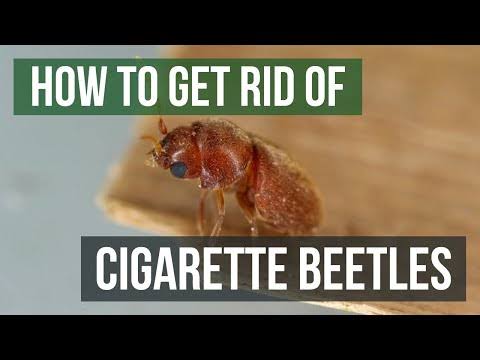
Understanding Tobacco Beetle Activity in Storage Facilities
Maintaining the quality of stored tobacco, dried agricultural materials, and packaged goods requires a structured approach to insect management. Tobacco beetles, commonly known as cigarette beetles, can develop in suitable stored products and remain unnoticed until adult insects emerge. Their small size and ability to reproduce under favorable environmental conditions make routine inspection an important part of storage management. Tobacco beetle control (菸甲蟲防治) combines pest identification, environmental monitoring, sanitation, and targeted treatment to help protect product quality. For warehouses, processing facilities, and distribution centers, a data-driven strategy supports better inventory protection, more consistent inspections, and measurable improvements in pest prevention.
How Does the Tobacco Beetle Life Cycle Influence Control Strategies?
Understanding the beetle’s life cycle helps explain why successful management requires more than removing visible adult insects. The insect develops through four stages: egg, larva, pupa, and adult. Larvae are primarily responsible for feeding damage, while adult beetles may emerge from infested materials and move through storage areas.
Under favorable conditions, development can occur rapidly. Research on cigarette beetles has documented generation times of approximately 32 days under certain hot-season laboratory conditions, illustrating how quickly populations may renew in suitable environments. Actual development rates vary according to temperature, humidity, and the stored material available.
This biological information supports practical decisions about inspection frequency, monitoring placement, and follow-up treatment. A program that considers multiple life stages is better positioned to identify developing infestations and evaluate control outcomes over time.
Which Statistics Help Measure Tobacco Beetle Infestations?
Quantitative monitoring provides a useful foundation for evaluating pest activity. Rather than relying solely on occasional sightings, storage managers can collect standardized observations and compare results across different zones and inspection periods.
Important performance indicators include:
- Trap detection rate: The percentage of inspected traps that capture tobacco beetles during a defined monitoring period.Capture frequency: The number of beetles recorded per trap over a consistent interval.Infestation incidence: The proportion of inspected product lots or storage zones showing confirmed pest activity.Inspection completion rate: The percentage of planned inspections completed within the scheduled period.Corrective-action completion rate: The proportion of identified sanitation or maintenance tasks completed as planned.
- Trap detection rate: The percentage of inspected traps that capture tobacco beetles during a defined monitoring period.
- Capture frequency: The number of beetles recorded per trap over a consistent interval.
- Infestation incidence: The proportion of inspected product lots or storage zones showing confirmed pest activity.
- Inspection completion rate: The percentage of planned inspections completed within the scheduled period.
- Corrective-action completion rate: The proportion of identified sanitation or maintenance tasks completed as planned.
These measurements become more useful when facilities maintain consistent inspection methods and document changes in storage conditions. Comparing results over successive weeks can help identify recurring activity and determine which areas need additional attention.
Why Is Environmental Monitoring Important for Tobacco Beetle Prevention?
Temperature, humidity, product condition, and storage practices influence the suitability of an environment for stored-product insects. Monitoring these variables helps facility managers understand the conditions surrounding pest activity.
Tobacco beetles can develop in several dried plant materials, so inspection should extend beyond tobacco products when other susceptible commodities are present. Packaging materials, processing residues, accumulated dust, and forgotten stock can also deserve attention during a thorough assessment.
Environmental records help reveal patterns that individual inspections might overlook. For example, recurring beetle detections in a particular storage zone may justify a closer review of temperature conditions, stock rotation, or sanitation practices.
Maintaining suitable storage conditions, promptly addressing product spills, and following established stock-handling procedures contribute to a more controlled environment. These measures work best when supported by regular monitoring and documented maintenance activities.
How Can Pheromone Traps Improve Tobacco Beetle Monitoring?
Pheromone traps are useful tools for detecting adult beetle activity and identifying areas that require closer inspection. They use attractants designed for the target species, allowing pest management professionals to gather information about insect presence and distribution.
Strategic placement is essential. Monitoring points may be established near storage zones, processing areas, receiving sections, and locations with a history of detections. Trap identification, placement dates, inspection intervals, and capture counts should be recorded consistently.
A single capture does not automatically establish the extent of an infestation. Instead, results should be interpreted alongside product inspections, environmental observations, and previous monitoring records.
Tracking capture trends can help professionals distinguish isolated detections from recurring activity. This information supports targeted investigations and helps facilities assess whether implemented control measures are producing the intended results.
What Role Does Sanitation Play in Tobacco Beetle Management?
Sanitation reduces the availability of materials that can support pest development and makes storage areas easier to inspect. It is particularly valuable in facilities that handle tobacco, dried herbs, seeds, food ingredients, or other susceptible products.
Effective sanitation practices include removing spilled materials, cleaning equipment and storage surfaces, inspecting difficult-to-reach areas, and maintaining organized inventory arrangements. Products should be stored according to appropriate environmental and packaging requirements, with damaged containers reviewed promptly.
Stock rotation also supports prevention by improving visibility and reducing the likelihood that older materials remain undisturbed for extended periods. Incoming shipments can be inspected according to established receiving procedures, helping identify potential pest activity before products enter general storage.
Documented cleaning schedules make these activities easier to coordinate. When sanitation records are reviewed alongside monitoring data, managers can determine whether particular areas need more frequent attention.
How Should Warehouses Develop an Integrated Tobacco Beetle Control Plan?
An integrated control plan combines prevention, detection, treatment, and follow-up assessment. Each stage contributes information that improves the next stage of decision-making.
The process begins with a baseline inspection to identify susceptible products, potential infestation points, and relevant environmental conditions. Monitoring devices and product inspections then establish a record of pest activity. When evidence indicates that intervention is appropriate, qualified professionals select suitable measures based on the affected materials, facility requirements, and applicable regulations.
Depending on the assessment, management options may include targeted insect control treatments, professionally supervised temperature-based methods, improved product containment, or other appropriate measures. Treatment selection should account for product compatibility, worker safety, and operational requirements.
Follow-up monitoring confirms whether activity has declined and helps identify locations requiring additional attention. This continuous evaluation makes the program adaptable to seasonal changes, inventory turnover, and variations in storage conditions.
How Can Data Reporting Strengthen Long-Term Pest Prevention?
Reliable reporting turns inspection results into practical management information. A useful report identifies monitored locations, trap findings, affected products, environmental observations, completed treatments, and recommended corrective actions.
Trend comparisons help management teams understand whether detections are becoming less frequent, remaining concentrated in certain areas, or appearing in new locations. Reports can also reveal operational improvements, such as higher inspection completion rates or faster resolution of maintenance tasks.
Visual summaries and simple monthly comparisons can make this information accessible to warehouse supervisors, quality assurance teams, and facility managers. Consistent records support accountability and help organizations allocate maintenance resources more effectively.
Most importantly, data should guide decisions rather than replace professional assessment. Interpreting capture counts alongside product condition, inspection findings, and treatment history provides a more reliable basis for evaluating performance.
Conclusion: Building a Reliable Tobacco Beetle Prevention Strategy
Effective tobacco beetle management depends on understanding insect biology, maintaining suitable storage conditions, applying consistent sanitation practices, and using monitoring data to guide interventions. Generation-time research demonstrates why inspection schedules and follow-up assessments are valuable, while pheromone traps and standardized reporting help facilities track activity across storage areas. By combining these methods within an integrated pest management program, businesses can strengthen product protection, improve operational consistency, and establish measurable prevention goals. A proactive, evidence-based strategy provides a practical foundation for maintaining high storage standards and supporting long-term quality management.